I love taking walks. It is quite possibly my favorite activity. I think better on the move. Steve and I can complete a few sentences without interruption and reconnect. While I’m grateful for our walkable community, I start to miss the mountains in winter, especially if it is foggy. I start to suspect that clearer skies and possibly even sun are just a few hundred feet up.
Get to Know the Forest
Access points into the Umatilla National Forest are roughly an hour from town. There are a handful of trails that have an upper trailhead and lower trailhead. Unlike a loop trail, this means that when the snow starts to accumulate at higher elevations, the lower trailheads are more likely available year-round.
Heading south from Walla Walla and just past Athena, Oregon, the roads less traveled lead to even more remote recreation opportunities. Along the Umatilla River and approximately 1.5 hours from Walla Walla, there are five trails that climb into the North Fork Umatilla Wilderness Area. The Lick Creek, North Fork Umatilla River, Nine Mile Ridge, Buck Creek, and Buck Mountain trails are connected via the Tie Trail that the Blue Mountain Land Trust’s Blues Crew, a volunteer trail maintenance group, has worked very hard to revitalize for enhanced connectivity.
An extremely important note about how to reach these trails—the bridge on Spring Hollow Road is impassible. The flood in 2020 destroyed it. Some apps will direct you to take Pambrum Road and connect to Spring Hollow Road. This will inevitably lead to a roughly ten mile backtrack to the highway. Turn on Mann Road. Currently, Google Maps is reflecting the correct route, and additional notes are located in our “How to Get There” section of the respective trail post.
The passable route does involve gravel roads. These roads are typically well maintained, but expect some water running over the road depending on the weather, potholes, and mud. It is still winter, and we pack a shovel based on a few hard-learned lessons.
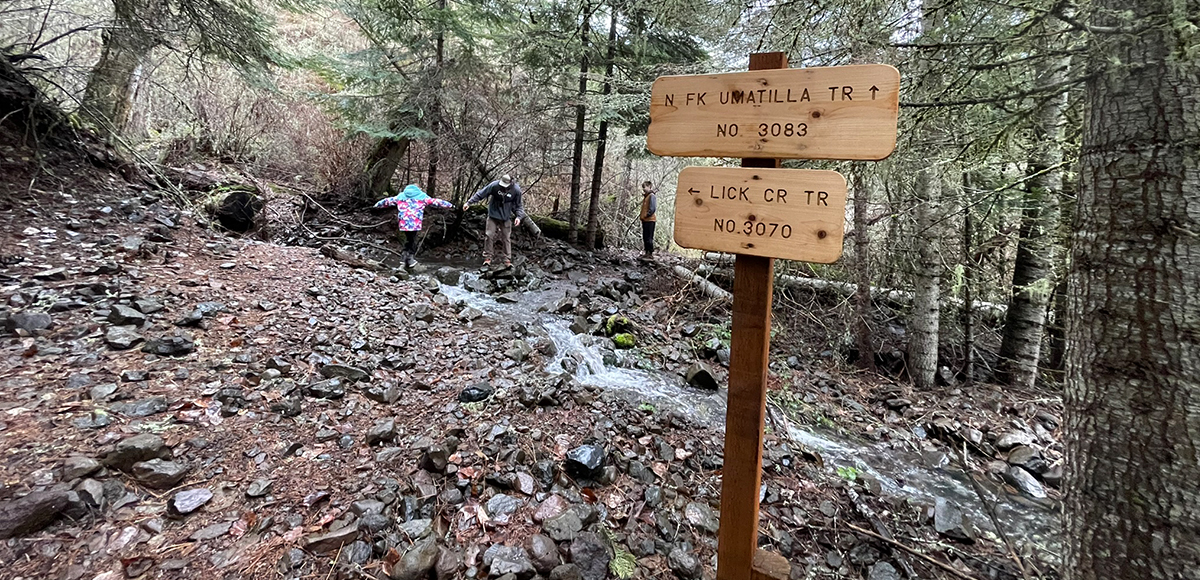
North Fork Umatilla River & Lick Creek Trails Intersect (Photo Credit: Gwen Dildine)Escape the valley fog without the burden of full snow gear. Sure, it is damp, but hearing the creeks and rivers and enjoying all the shades of green possible is worth the muddy boots. This area is remote, so it is nice to take a few friends or family along for the ride.
Choose Your Own Adventure
Our family typically pops around from trail to trail, working out our stir-crazy wiggles. The family-friendly nature of the adventure could easily turn into a more arduous journey for those wanting a challenge. All these trails head up the mountain and involve switchbacks and steady climbs. It just depends on mother nature where the snow begins.
We rarely see anyone else on the trail and sometimes don’t pass another vehicle on our way to this part of the Umatilla National Forest. Recreating as a group with friends and family is a good idea. Make sure to tell someone where you are going. Check out our short video that showcases this area.
Winter is such a beautiful time to experience the mountains. Every trendy earth tone color is on display—moody grays, dusty greens, muddy tans, and deep blues. It is damp. The ferns are vibrant, the lichens are plump, and the mushrooms are giant and strange. The creeks are flowing and deafening; the mud reveals all the creatures who travel these trails more than we do; and trees blown down by winter storms are nature’s hurdles. It feels like the forest is recharging.
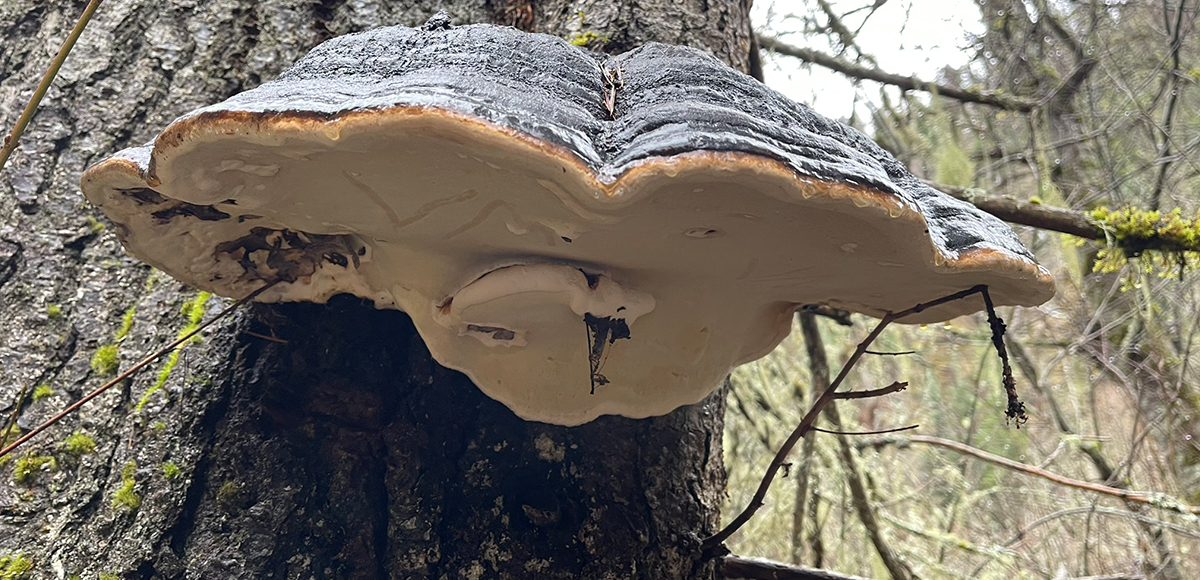
Humongous Fungus (Photo Credit: Gwen Dildine)While this is not the renowned woodland fungus of the southern Blue Mountains, it is still an impressive site. According to The Blues by Robert Carson, “down in the southern reaches of the range, dwells what may be the largest organism on earth. It’s an an example of a very widespread woodland fungus, Armillaria ostroyae…A single organism, it covers 3.5 square miles, weighs 35,000 tons, and is thought to be about 8,600 years old.”
Take Time to Play Outside
It is hard to believe all this is just over an hour from Walla Walla. Outdoor recreation often requires weather-appropriate gear, equipment, and a reliable off-road vehicle, but sometimes the biggest obstacle is time. That is why this half-day adventure is a perfect balance. It is a welcome two or three hours breathing fresh, brisk mountain air.
If your calendar looks anything like mine, these windows of time are precious. Take them. This is when memories are made. Often a half day here and there is all that is available.
If visiting the valley, spending a few hours taking in the scenery and stretching the legs leaves plenty of time for wine tasting, shopping, or attending a show. Walla Walla is home to the longest operating symphony orchestra west of the Mississippi River; Fort Walla Walla Museum offers interactive exhibits and adds the historical perspective of the valley; and, to refuel, there are plenty of delicious, local restaurants.
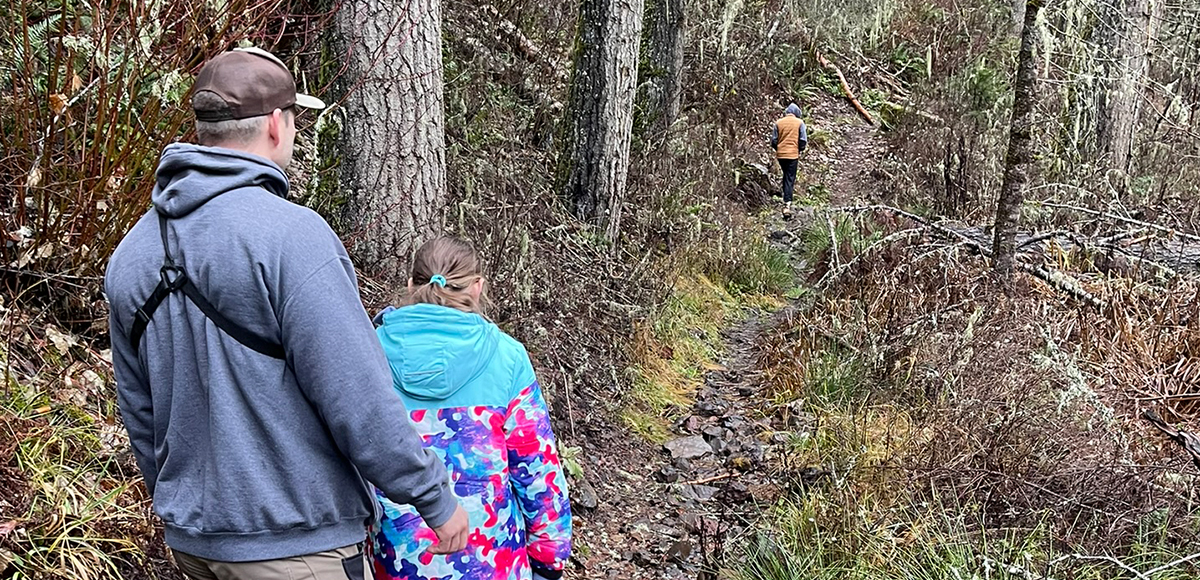
Buck Creek Trail (Photo Credit: Gwen Dildine)Safety is always top of mind. That is bear spray strapped to Steve. We always pack a shovel. We also have a Garmin and make sure to bring it with us. We picked up a water filter a few years ago and that greatly reduced the weight of our packs. It took us a few visits to figure this area out, so just recreate as your comfort level allows.
The Muddy but Thorough Details
On the website, we provide our experience with the Lick Creek, North Fork Umatilla River, Nine Mile Ridge, and Buck Mountain Trails. The Buck Creek Trail is not live as of the date this blog was posted. This is due to the fact we haven’t completed that trail in its entirety. We have used roughly the first mile during optimal winter conditions. Additionally, the creek running adjacent to that trail (Buck Creek) prevents passage to the Buck Mountain Trail. There are plenty of other options, so it isn’t worth the risk of trying to creek cross during the winter.
This is a remote experience. When we first started wandering this area, we would simply walk the road or walk the Tie Trail that connects the five trails and follows the road. Consider inviting a few friends and gain familiarity with the area together.
Full disclosure, I have asked our daughter to sing, “Baby Shark,” when she was little because we saw fresh bear tracks. Many animals call these protected places home. Take precautions to respect their home and understand the appropriate response should an encounter occur. Additionally, many plant species thrive in the Blue Mountains, so staying on trail is always good practice.
Get Outside this Winter
It’s always tempting to curl up on the couch and hibernate through the cold, dark months. The welcome reward of venturing out is the likelihood that clear, sunny skies await. It is a whole different world a few hundred feet further away from sea level.
Balancing snow sports with strolls through the forest keeps winter moving. These lower trailheads provide a unique opportunity to find peace during a traditionally busy time. Spend half a day connecting with nature and go outside Walla Walla.