
CURRENT CONDITIONS
52° F

OUTSIDE WALLA WALLA
OUTSIDE WALLA WALLA
Camping

Camping
Camping in the Blue Mountains
There are several options when it comes to camping in the Blue Mountains. With 1.4 million acres in the Umatilla National Forest and 2.3 million acres in the Wallowa-Whitman National Forest, that is approximately 5,781 square miles.
For reference, that is the size of Connecticut and Rhode Island combined. To say there are a few camping opportunities in the Blue Mountains would be an understatement.
Campgrounds with camp hosts are sprinkled throughout the area. More remote campgrounds with only a handful of sites and limited facilities give campers a primitive experience. Dispersed camping is a popular option and affords users the opportunity to really get away from it all in a mindful manner to the environment.
Conversely, many campgrounds can accommodate recreational vehicles for a few added comforts and conveniences. Cabins are also available for rent and managed by the Forest Service. No matter your definition of shelter, the Blue Mountains make a pretty wonderful place to call home for a night or two.
With approximately 90 campgrounds to choose from in just the National Forests alone, that is a lot of camping to exhaust all the possibilities. Campgrounds typically have the basics—toilets, picnic tables, and a relatively level spot to set up camp.
Temperatures can vary quite a bit regardless of the time of year, so always pack something warm. We spent a night near Ski Bluewood in July when the valley was over 100 degrees, and we woke up to frost on the tent.
On our return trip to town, the temperature variance from the mountains to town was an impressive 70 degrees. Point being, head to the mountains for a quick reprieve from heat, work, the city, and any number of stressors–let nature work her calming magic.
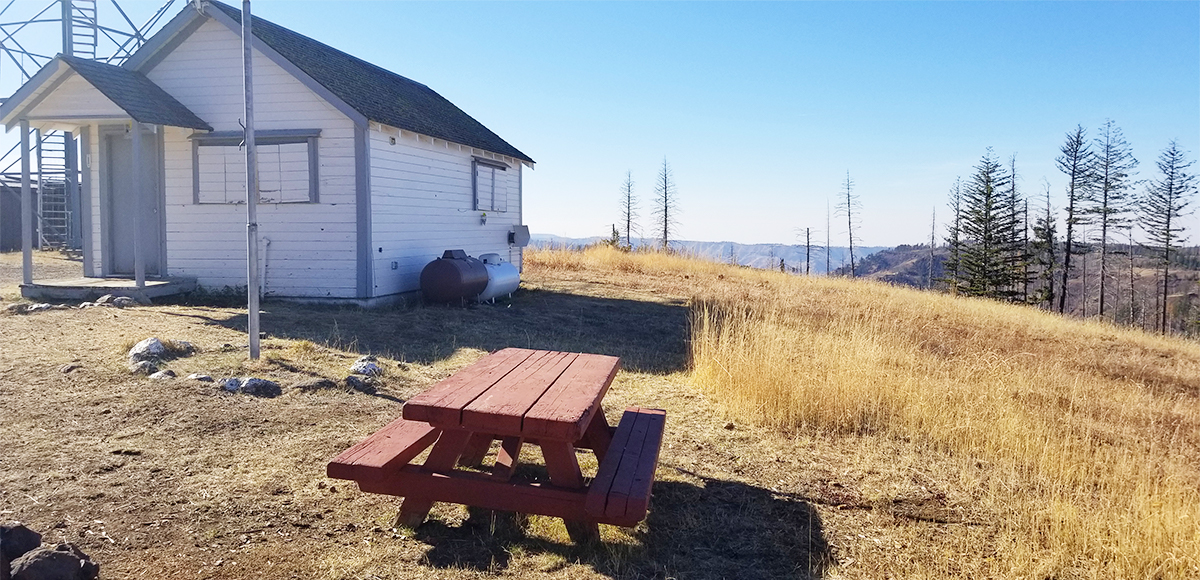
Camping on Public Lands 101
In the Umatilla National Forest there are 36 campgrounds, 11 of those sites can accommodate large groups and 16 allow RVs. Campgrounds weren’t designed for large RVs, so please consider the journey to reach the campground and the capacity of the campground before starting your trip.
Cabin rentals are available for a modest fee and are reservable. In the Umatilla National Forest, the cabins are available year-round. The Wallowa-Whitman National Forest offers over 59 campgrounds. This forest has more RV-friendly sites as well as four seasonal cabins. As a general rule, all campgrounds are non-reservable with a 14 day stay limit in a 30 day time period.
Of the day-use fees or camping fees collected, 85% of those funds go toward improvements and maintenance. Potable water is often not available so pack accordingly. Deadwood is allowed for fire material, but permits are needed to remove firewood. Pets should stay on a leash.
Discharging a weapon is forbidden; quiet time is 10 pm. Most importantly, pack it in and pack it all out. Those are just a few of the general rules common to both forests.
Always read signage at the campground for information specific to that location. Remember, the good people of the Forest Service are charged with a mission to provide outdoor recreation opportunities as well as keep you safe.
Following a few simple rules makes that effort so much easier.
Campgrounds vs Dispersed
Campgrounds aren’t just convenient for the user but are good for the forest as well. Campers have access to a few basic conveniences that also help keep the forest clean and minimize impact on the environment. They also sometimes have a camp host to respond to questions and provide on-site management of the grounds.
Dispersed camping is allowed in the National Forest. This means you can camp roughly 300 feet off whatever road (paved or primitive) where it appears others have camped in the past.
Obviously, no facilities are available so pack in and pack everything out. These spots are common in the Blue Mountains especially when there isn’t a campground near.
A web of well-maintained mountain roads exist just outside of town; for example, it takes a little over an hour to go from downtown Walla Walla to just shy of the top of Chase Mountain (past Ski Bluewood) where a number of these dispersed campsites exist.
Talk about a great way to watch the sunset, and an even better place to stargaze.
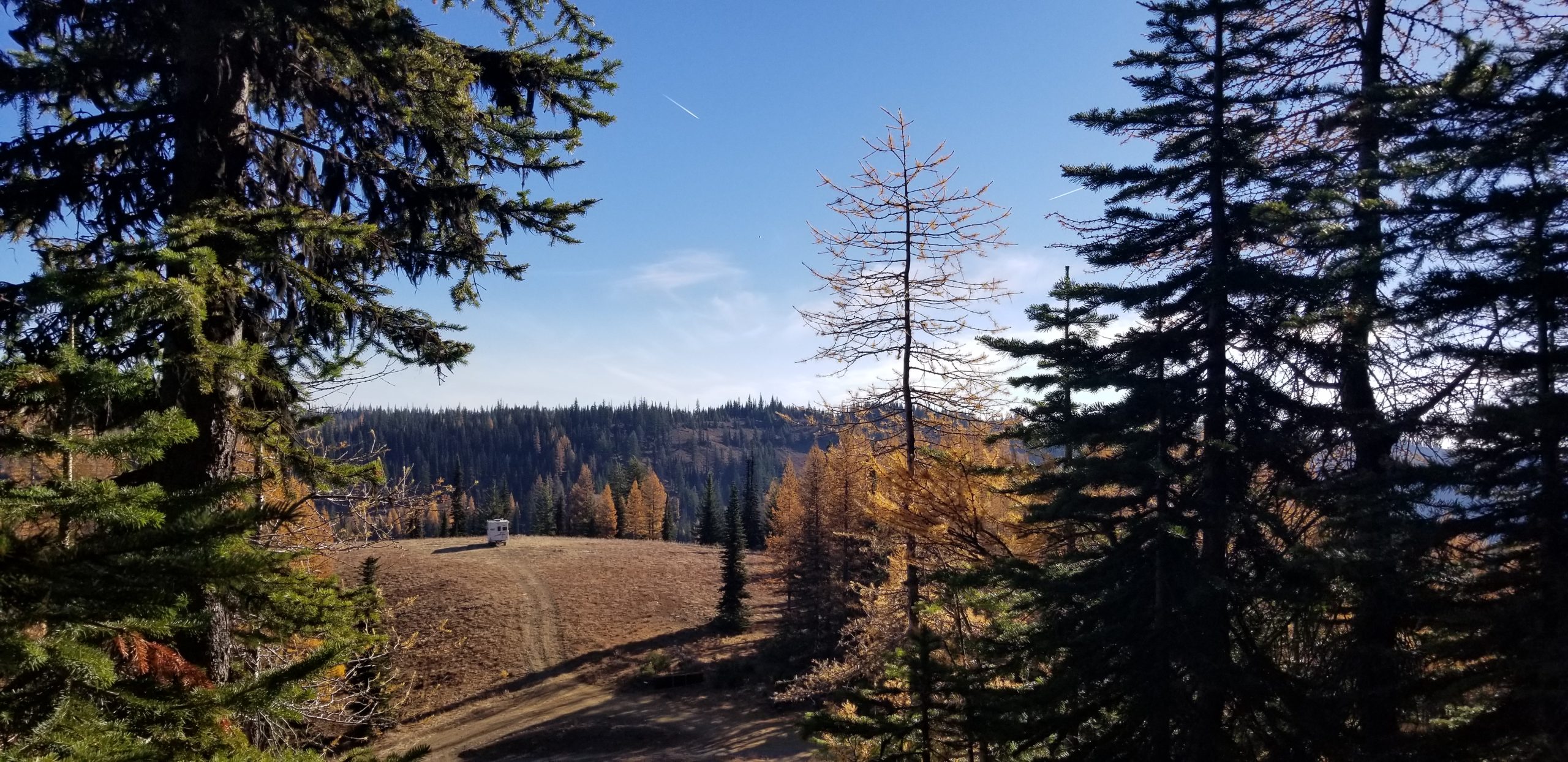
Camping with a Recreation Vehicle
There are plenty of campsites that accommodate RVs. Depending on the size of the RV, dispersed camping could be an option as well. For larger RVs, definitely double check what sites can accommodate with the campground of interest. It is also worth inquiring about the condition of any gravel roads involved.
Cabins in the Blue Mountains
For a truly unique way to spend a night in the forest, consider a cabin rental. There are 13 cabins available across the Umatilla National Forest and the four ranger districts, and many are in the northern half of the forest.
Retired fire lookouts and ranger stations make quaint accommodations. Stocked with basic necessities, enjoy the challenge of snowshoeing to a cabin in winter or bring the family to stargaze in the summer.
Contact the respective ranger district office for more information and for details specific to each cabin.
How To Be a Good Camper
The last thing any mindful camper wants to do is jeopardize the environment in and around the campground. A few helpful reminders to all of us will ensure continued access to these special places.
Perhaps obvious but worth stating is to always camp in designated areas. Even dispersed camping asks that folks camp where it appears others have camped in the past and not more than 300 feet off the road.
As a courtesy to fellow campers, keep the noise down and always treat camp hosts with respect. Be aware of the amount of noise pollution or light pollution your camping setup is putting off.
With regard to the rest of the animal kingdom, please don’t feed any of them. A few minutes of adorable, unnatural interaction with an animal likely will lead to its demise.
Consider hauling a few guidebooks on your next adventure and trade interaction for observation. Keeping your campsite clean is also important to deter visitors.
Another safety concern at the campsite is campfires. Always use existing pits and make sure to extinguish the fire. Check with the camp host daily regarding fire regulations, or if you opt for a more remote camping experience, check with the local Forest Service office before leaving town.
When utilizing the campgrounds, always follow existing trails to minimize your impact on the surrounding vegetation. If fishing, don’t clean fish in the bathrooms as the plumbing won’t hold up to that kind of use.
The same is true of dishes and food waste. Pets are allowed on a leash virtually everywhere, including campgrounds, but make sure your furry friends are suited for the journey (i.e. not barking all night). Of course, clean up after them as well.
Just a few simple, obvious camping etiquette guidelines will ensure that everyone enjoys their camping trip and that those who follow will find it better than you did.
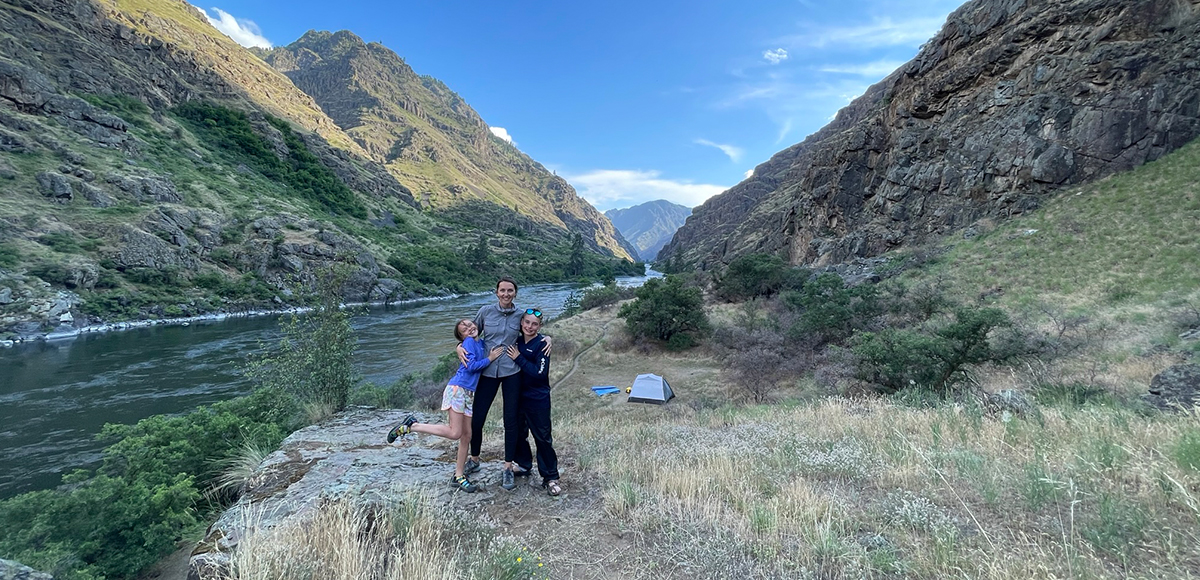

Camping is one of life’s simple pleasures. A few campgrounds are close to town and make excellent destinations for those wanting to mix in city conveniences with outdoor recreation. Other campgrounds feel as though there isn’t another soul in the forest. Choose what fits your expectations, and enjoy a few nights under the stars.
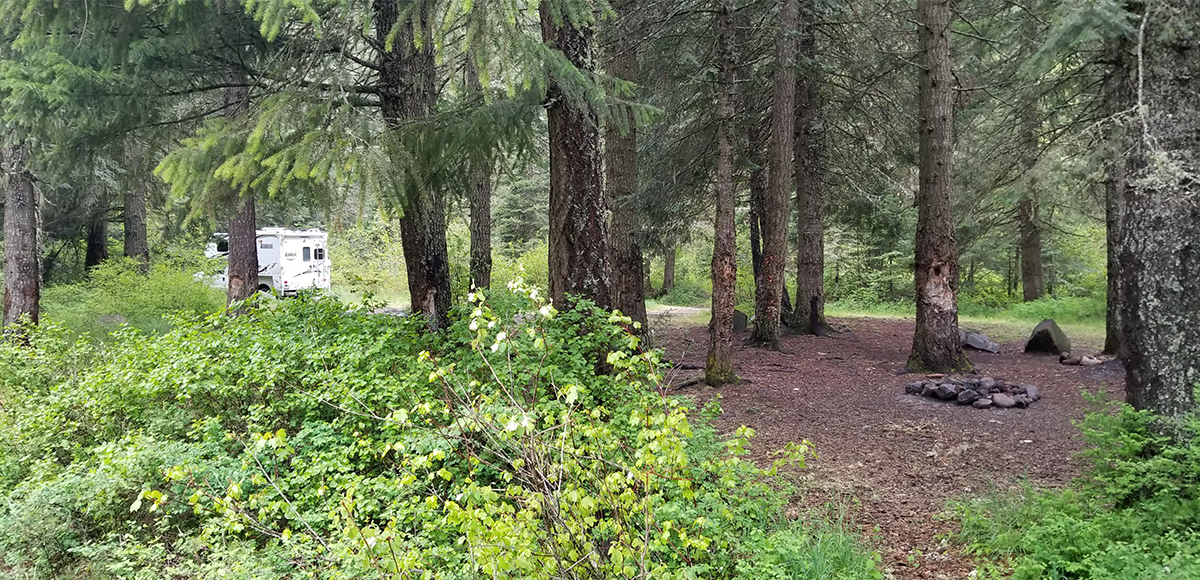
Have you ever wandered past a fire pit not far from the road or seen a clearing that looks like a great place to call home for a few nights? You likely ran across a spot to dispersed camp, and you too can dispersed camp there. Don’t worry, the Forest Service approves, but please be excellent stewards of the land and leave no trace.
Activity
ACTIVITY
DISTANCE
